
A site can have mediocre rankings and still earn AI mentions in some situations. It can also rank well and still get skipped. The useful diagnosis is not "SEO good" versus "SEO bad." It is discovery, page clarity, and recommendation trust.
Key Takeaways
- Weak traditional SEO does not automatically prevent ChatGPT from citing or recommending a website, but it does reduce the chances that the right page gets discovered consistently.
- Traditional SEO still matters because crawlability, page focus, internal support, and rankings affect whether your content enters the candidate set in the first place.
- ChatGPT style visibility also depends on interpretation. A page that is easier to classify, summarize, and trust can beat a better-ranking page that feels vague or risky.
- If your brand appears but the wrong page gets used, or your positioning is muddy, the problem is often page-role clarity rather than total invisibility.
The Short Answer
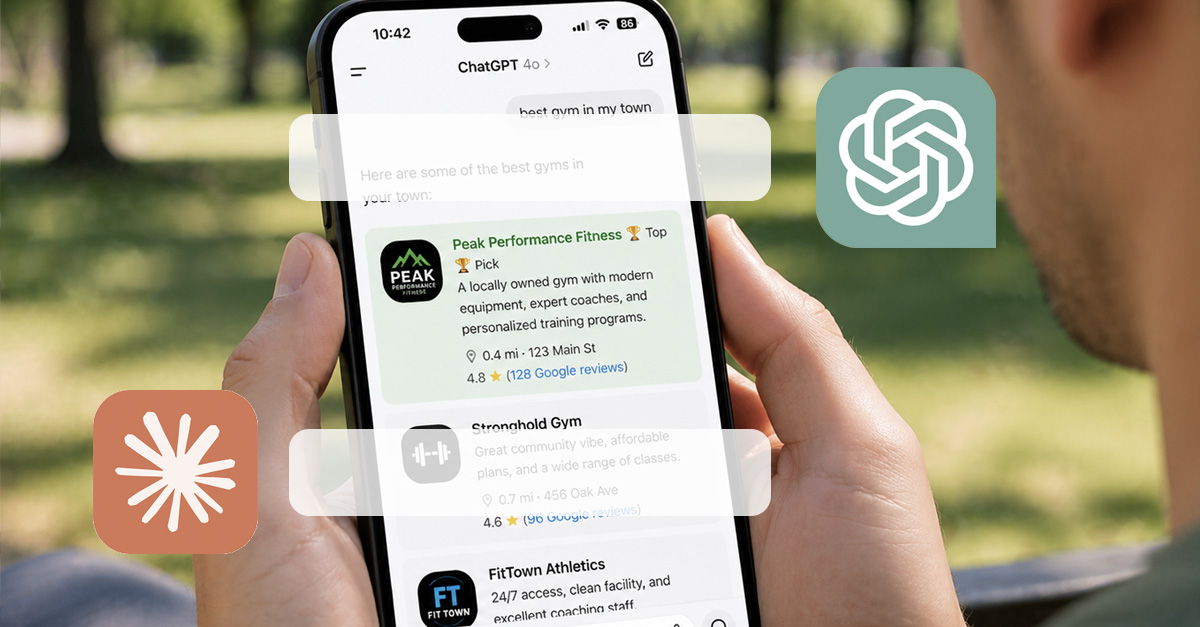
Yes, ChatGPT can sometimes cite or recommend your website even if your traditional SEO is weak.
But that does not mean traditional SEO stopped mattering. It means traditional SEO is only part of the path. A page still has to be discoverable enough to show up, then clear enough to interpret, and stable enough to reuse. If any of those layers fail, strong rankings alone will not save you. If some of them work well, mediocre rankings do not always disqualify you.
If you want the broader framing first, start with AI SEO and How AI Search Works. This article stays focused on one narrower question: whether weak traditional SEO automatically blocks ChatGPT mentions, citations, or recommendations.
Why This Question Matters
A lot of teams assume the answer is either "yes, rankings still control everything" or "no, AI search is a completely different game." Neither interpretation is very useful.
The real pattern is more conditional. Traditional search performance still influences whether your pages are easy to find and easy to trust as web documents. But ChatGPT style outputs also depend on whether the content is easy to classify, easy to quote safely, and clearly matched to the prompt. That is why a site with only average Google performance can still show up in certain AI answers, while a stronger site may be absent when its pages are broad, muddy, or hard to summarize.
This is also why the question overlaps with, but does not duplicate, how to check if ChatGPT mentions your website. That article explains the workflow for checking. This article helps you interpret what the result actually means.
Where Traditional SEO Still Matters
Traditional SEO still shapes the starting conditions. If your site is hard to crawl, internally messy, poorly focused, or barely visible for the topic at all, you are giving AI systems less to work with.
In practical terms, traditional SEO still helps with:
- Discovery. Stronger rankings and better topic coverage improve the odds that your page is even considered.
- Page targeting. Clear titles, focused headings, and query-page fit make it easier for the right URL to own the right job.
- Internal support. A page surrounded by relevant supporting pages and clean internal links is easier to interpret as an authoritative source.
- Baseline trust. A site that looks technically maintained and topically coherent usually starts from a better position than one that feels thin or scattered.
If you want a deeper read on this layer, What Do Traditional Rankings Actually Mean in AI SEO? is the most direct companion piece.
Where ChatGPT Uses More Than Traditional SEO
Getting discovered is not the same as getting used.
Once content is in play, AI systems still have to decide whether the page is clear enough to summarize, whether the claims feel bounded enough to repeat, and whether the page cleanly answers the prompt. That is where traditional SEO metrics stop being a full explanation.
Three pages can all be visible in traditional search, but the one most likely to get cited is often the one that:
- states the answer quickly
- uses stable terminology instead of switching labels
- keeps one clear page role instead of trying to do five jobs at once
- matches its visible content to supporting structure such as schema and internal links
That is why an article like why AI sometimes skips a page entirely matters so much. The page can exist, and even rank, while still being a weak candidate for citation.
When Weak Traditional SEO Can Still Lead to Mentions
Weak traditional SEO can still produce ChatGPT mentions or recommendations in a few common situations.
1. The prompt is narrow and your page is unusually clear
A site may not rank strongly across a broad category, but a specific page can still be highly usable for one precise question. If the answer is easy to extract and the page clearly owns that use case, it may still get used.
2. Your brand is easier to describe than it is to rank
Some companies do not dominate rankings, but they are described consistently across their own site, directories, reviews, or third-party mentions. That can make them easier to recognize and recommend than a ranking report alone would suggest.
3. The category is not heavily saturated
In less crowded spaces, moderate discoverability plus strong clarity may be enough. You do not always need elite traditional SEO performance if the AI system can still find and confidently summarize your best page.
4. Your page is structurally better than stronger competitors
A weaker site can sometimes beat a larger competitor if the competitor's page is too promotional, too vague, or too overloaded. Clear structure can outperform raw domain strength in certain prompt situations.
The important nuance is that none of these scenarios mean traditional SEO is irrelevant. They mean weak SEO is sometimes survivable when clarity and fit are strong enough.
When Weak Traditional SEO Usually Fails
Weak traditional SEO becomes a much bigger problem when it combines with weak page design or weak trust signals.
That usually looks like this:
- Very low discoverability. If your relevant pages barely show up anywhere, there is little chance they will be selected consistently.
- Broad, unfocused pages. A page that mixes service description, company story, FAQs, and blog education without a clear center is harder to reuse.
- Page-role confusion. If the homepage, service page, and blog all compete for the same job, AI systems have less reason to trust any one of them as the source.
- Thin trust support. If the page makes strong claims with little supporting context, recommendation quality drops.
- Conflicting site signals. If your copy, internal links, and schema describe the business differently, interpretation weakens fast.
When several of those problems stack up, the site is not just weak at SEO. It is weak at being understood.
How to Tell Whether Your Problem Is Discovery or Interpretation
This is the most useful split in the whole diagnosis.
Discovery problems look like this:
- your site rarely appears for relevant prompts
- competitors dominate both search and AI surfaces
- your core pages have weak topical presence or weak internal support
Interpretation problems look like this:
- your brand appears, but the wrong page gets used
- the answer describes you vaguely or inaccurately
- the page ranks, but AI tools still skip it or paraphrase it badly
- another page on your own site gets selected instead of the intended one
The easiest way to separate these is to pair manual prompt checks with the Free AI Visibility Checker and then inspect the intended page in the Free AI SEO Checker. If the visibility layer is weak, you may have a discovery problem. If visibility exists but the output is wrong, the page itself often needs clearer structure or stronger support.
What to Fix First
If you suspect weak traditional SEO is holding you back, do not start by assuming you need a massive content campaign.
Start here:
- Check whether ChatGPT or other AI tools mention you at all for the prompts that matter most.
- Identify whether the right page is being surfaced for those prompts.
- Tighten page role, intro clarity, headings, and internal support on the page you actually want cited.
- Use the Free JSON-LD Schema Generator to make sure your structured data supports what the page clearly says.
- Only then decide whether your next move is broader traditional SEO expansion, page consolidation, or stronger off-page support.
If your site already has overlapping pages around the same topic, review how to fix content cannibalization properly before publishing more. If your page is being skipped even though the topic is clearly relevant, why AI decides your page is too risky to quote is a better next read.
FAQ
- Can ChatGPT mention a site that does not rank well?
- Yes. Weak rankings do not make mentions impossible. But the content still has to be discoverable enough to enter consideration and clear enough to be reused for the prompt.
- Does traditional SEO still matter for AI citations?
- Yes. It still helps the right pages get found, understood, and reinforced by the rest of the site. The difference is that discovery alone does not guarantee a citation or recommendation.
- What matters more for ChatGPT, rankings or page clarity?
- Both matter, but they matter at different stages. Rankings help discovery. Page clarity helps interpretation and reuse. A weak page can waste strong discovery, and a clear page can sometimes outperform a stronger but messier competitor.
- What should I do if ChatGPT mentions my brand but uses the wrong page?
- That usually points to a page-role or site-structure problem. Focus on clarifying the intended page, strengthening internal links to it, and reducing overlap with competing pages on your own site.
Final Takeaway
ChatGPT can sometimes cite or recommend a website that is not especially strong in traditional search. But that does not mean traditional SEO stopped mattering. It means traditional SEO is only one part of whether a page gets used.
The most useful question is not "Do rankings matter anymore?" It is "Is my problem discovery, page clarity, or recommendation trust?" Once you answer that cleanly, the next fix becomes much easier to choose.